Town Hall Meeting Organizer: Designing More Interactive Internal Meetings

A group photo of the Global Events Jakarta team
Communication between leaders and employees plays an important role in maintaining alignment within a company.
Through open communication, employees can understand the company’s business direction, stay informed about organizational developments, and raise questions about matters that affect their work.
One way to support this communication is through a town hall meeting. These gatherings give company leaders an opportunity to share important information while creating space for dialogue with employees.
However, an effective town hall meeting requires more than presentations alone. The event format, agenda structure, Q&A sessions, and participant engagement all need to be carefully designed to encourage two-way communication.
For this reason, companies should consider several important aspects when planning these meetings.
Working with a town hall meeting organizer can help coordinate event requirements, from preparation to execution, ensuring that the meeting stays on track and delivers a more interactive experience.
Other Articles Making Brand Activation More Engaging and Memorable
What Makes a Town Hall Meeting Effective?
A town hall meeting is an internal gathering that allows company leaders to communicate information to employees in a shared forum.
Topics may include company achievements, policy changes, business strategies, upcoming targets, and organizational developments.
Beyond sharing information, these meetings can also serve as a platform for listening to employees’ perspectives.
Q&A sessions and discussions give participants the opportunity to seek clarification, provide feedback, and gain a deeper understanding of company decisions.
To achieve these objectives, companies need to consider the participant experience throughout the event. Presentations that are too long and lack interaction can make it difficult for attendees to maintain their attention.
By contrast, an agenda that creates opportunities for participation can help keep employees engaged.
A town hall meeting should therefore be designed as a communication forum, rather than simply a one-way presentation from company leaders to employees.
1. Define Your Objectives and Develop a Clear Agenda
Planning a town hall meeting should begin with identifying the key messages the company wants to communicate.
Does the company want to present performance results, explain organizational changes, introduce a new strategy, or build a shared understanding of business priorities?
These objectives help determine the content, speakers, and duration of each session. Without a clear focus, the agenda may become overloaded with information, making it difficult for participants to understand the main messages.
Once the objectives have been established, organize the agenda in a logical sequence.
The meeting may begin with opening remarks and key presentations, followed by a discussion or Q&A session, and conclude with a summary and follow-up actions.
Time allocation is also important. Each session needs a realistic duration to ensure that presentations do not reduce the time available for participant interaction.
A well-structured agenda helps company leaders communicate their messages effectively. At the same time, participants gain a clear understanding of the meeting’s objectives and the information they need to take away.
2. Give Employees Opportunities to Participate
One of the challenges of a town hall meeting is transforming what might otherwise be a one-way presentation into a forum that encourages dialogue.
Employees may have questions or suggestions but might not always feel comfortable raising them directly in front of a large audience.
Companies should therefore provide participation methods that suit the audience and the objectives of the event.
Structured Q&A Sessions
Q&A sessions give employees the opportunity to ask company leaders questions and receive direct explanations.
To make these sessions more effective, a moderator can group questions by topic and help keep the discussion relevant.
Time management is equally important to prevent the session from being cut short by earlier agenda items. This gives employees sufficient opportunities to raise their questions.
Polls and Digital Questions
For meetings with large audiences, polls and digital question-submission tools can help encourage greater participation.
Participants can submit responses or questions using their own devices.
These methods can also help organizers identify the topics that attract the most attention. The results can be used to guide discussions during the event or inform subsequent internal communications.
Choosing the Right Discussion Format
Not every topic needs to be delivered through a formal presentation.
Some agenda items may be better suited to panel discussions, sharing sessions, or Q&A sessions with company leaders, allowing participants to understand issues from different perspectives.
The format should be selected based on the number of participants, communication objectives, and available time. Most importantly, every session should serve a clear purpose in supporting employee engagement.
3. Choose an Event Format That Meets Your Company’s Needs
Town hall meetings can be held onsite, virtually, or in a hybrid format. Each option comes with its own considerations, particularly regarding the number of participants, employee locations, and interaction requirements.
Onsite meetings allow participants to interact directly with company leaders and colleagues. This format is suitable when the company wants to bring everyone together in one location.
However, venue capacity, seating arrangements, and audio-visual requirements need to be considered from the outset.
Virtual meetings, meanwhile, allow employees from different locations to participate without gathering physically in the same place.
The challenge is maintaining participant engagement through digital platforms and ensuring that presentations remain easy to follow.
Hybrid meetings combine both approaches. Employees attending in person and those participating online should have equitable access to information and opportunities to contribute.
In hybrid formats, technical coordination is particularly important. Audio quality, presentation displays, connection stability, and question management must all be carefully handled so that remote participants do not miss important parts of the discussion.
The choice of format should therefore reflect the event’s objectives and participants’ needs, rather than being based solely on ease of execution.
4. Prepare the Technical Requirements and Event Flow Carefully
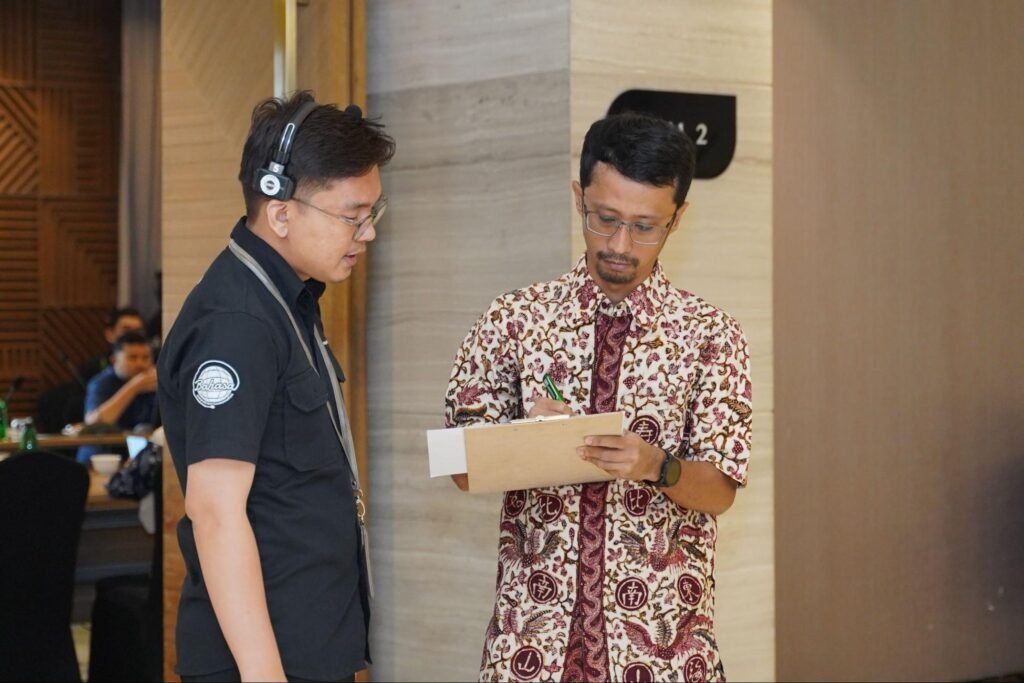
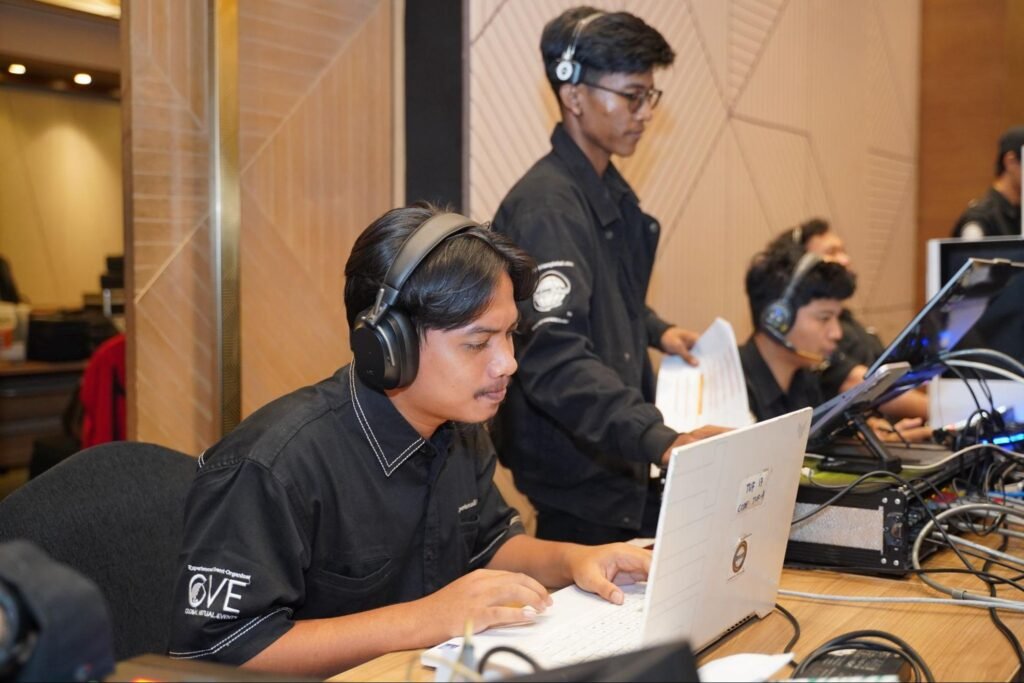
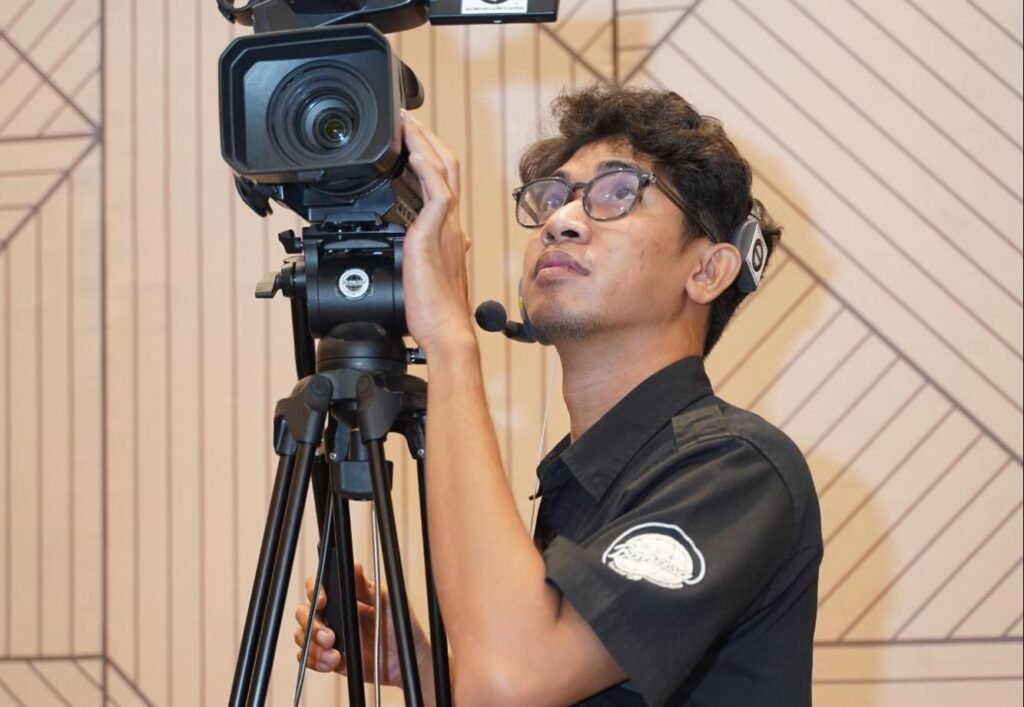
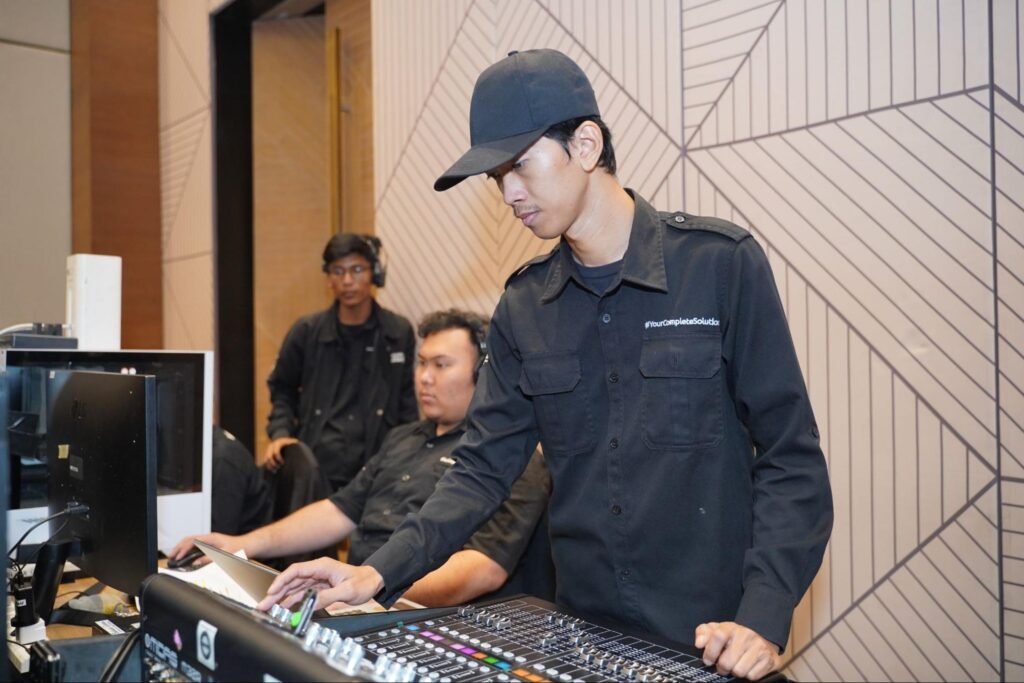
The Global Events Jakarta team on duty
The Global Events Jakarta team on duty
A well-designed agenda needs to be supported by adequate operational preparation. From venue readiness and presentation equipment to virtual platform arrangements, every requirement must be aligned with the event format.
For onsite meetings, organizers need to consider registration, room layout, sound systems, lighting, and presentation materials.
Virtual and hybrid events, meanwhile, require checks of the platform, microphones, cameras, internet connectivity, and broadcasting systems where applicable.
The event flow should also be communicated clearly to everyone involved. Speakers, moderators, and technical teams need to understand the session sequence, timing, and procedures for transitioning between agenda items.
If there are changes to the schedule or presentation materials, the relevant parties must be informed. This type of coordination helps minimize confusion and keeps the event running smoothly.
In addition, pre-event checks can help identify potential issues early. Through briefings and rehearsals where necessary, the team can verify that every element is ready before participants join.
5. Keep Communication Going After the Meeting
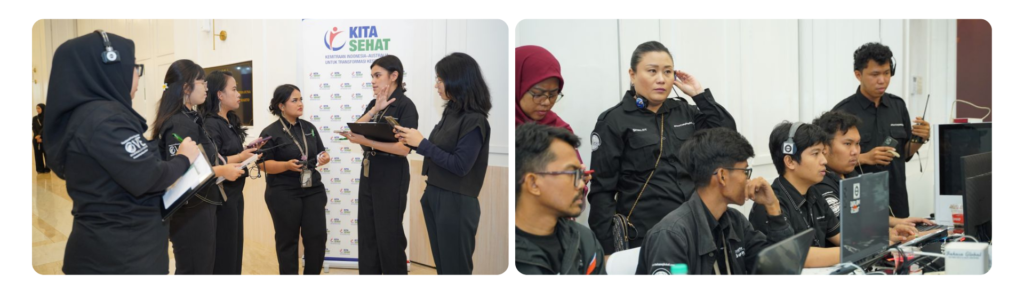
Komunikasi tim Global Events Jakarta di lapangan
A town hall meeting does not have to end when the final session concludes. The information shared and questions raised can serve as a foundation for subsequent internal communication.
Companies should therefore determine appropriate follow-up actions. Key discussion points can be summarized and shared with employees, particularly those who may need to refer back to the information after the event.
Unanswered questions can also be documented and assigned to the relevant teams for follow-up. This helps maintain clarity and demonstrates that employee feedback is being taken seriously.
Companies can also collect feedback on the content, format, and overall participant experience. This information can help evaluate whether the meeting has successfully supported employees’ understanding of the company’s key messages.
With structured follow-up, town hall meetings can become part of an ongoing internal communication process rather than simply another recurring item on the corporate calendar.
Supporting Town Hall Meetings with Global Events Jakarta
An interactive town hall meeting requires a balance between communication objectives and operational readiness. The agenda must be clearly structured, participant engagement must be facilitated, and technical requirements must support the smooth delivery of the meeting.
Global Events Jakarta (GEJ) provides event planning and management services, including venue coordination, crew management, and technical support for onsite, virtual, and hybrid events.
For meetings that require digital interaction, tools such as Slido or Mentimeter can be considered based on the needs of the event.
Agenda preparation, speaker coordination, audio-visual arrangements, and event flow management are also important aspects that need to be aligned during the planning stage.
By understanding a company’s requirements from the outset, the event can be designed to suit its preferred format, participant numbers, and communication objectives.
This approach helps companies organize internal meetings in a more structured and coordinated manner.
Make Your Town Hall Meeting More Interactive with GEJ
A town hall meeting gives companies an opportunity to communicate their business direction while strengthening relationships with employees.
To make these meetings effective, companies need to consider the agenda, opportunities for participation, event format, technical readiness, and post-event follow-up.
Thorough planning helps ensure that every element works together to support the communication objectives.
As a result, town hall meetings can become more focused, encourage active participation, and create meaningful opportunities for dialogue between company leaders and employees.
Planning a town hall meeting for your company? Discuss your event requirements, preferred format, and technical support needs with Global Events Jakarta.
For more information, contact:
📞 +62 811 9224 273 | +62 821 1331 1781
🌐 www.globalvirtualevents.co.id
📧 contact@globalvirtualevents.co.id