


Hybrid Event Visual Strategy: Integrating Onsite and Online for Maximum Impact
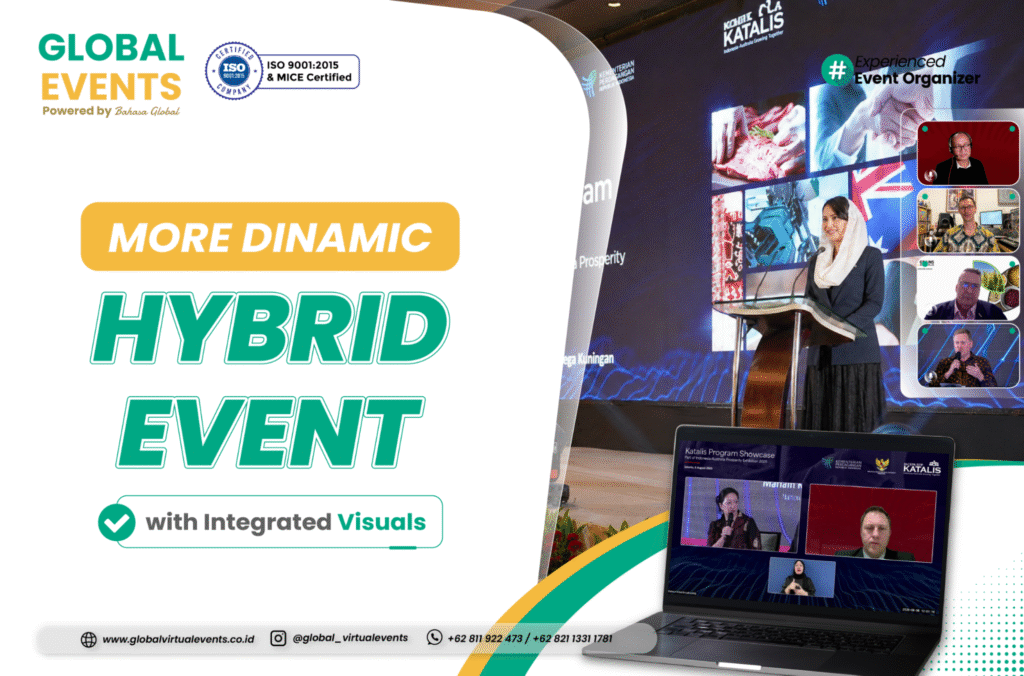
Hybrid events have become a leading format in many modern events. However, the main challenge is not only the broadcast itself. The bigger challenge is how to unify onsite and online visuals. If the visuals are not integrated, the audience experience will feel inconsistent.
Because of that, visual strategy must be planned from the beginning. Onsite audiences watch large screens at the venue. Meanwhile, online audiences watch the event from personal devices. If both sides are not aligned, the event message will feel incomplete.
Why Visual Integration Matters in a Hybrid Event
In a hybrid event, the audience joins from two different spaces. Some attend directly at the venue. Others follow the event through digital streaming. Because of that, visuals cannot be designed for only one side.
If the onsite and online displays do not align, the audience experience will decline. Onsite audiences may feel the event runs well. However, online audiences may feel the visuals are less clear. As a result, the message becomes inconsistent.
Visual integration is not only about using the same design. The visuals must also stay aligned in content, timing, and delivery flow. Because of that, an event organizer needs to manage everything from the planning stage. With that, all audiences can receive a more complete experience.
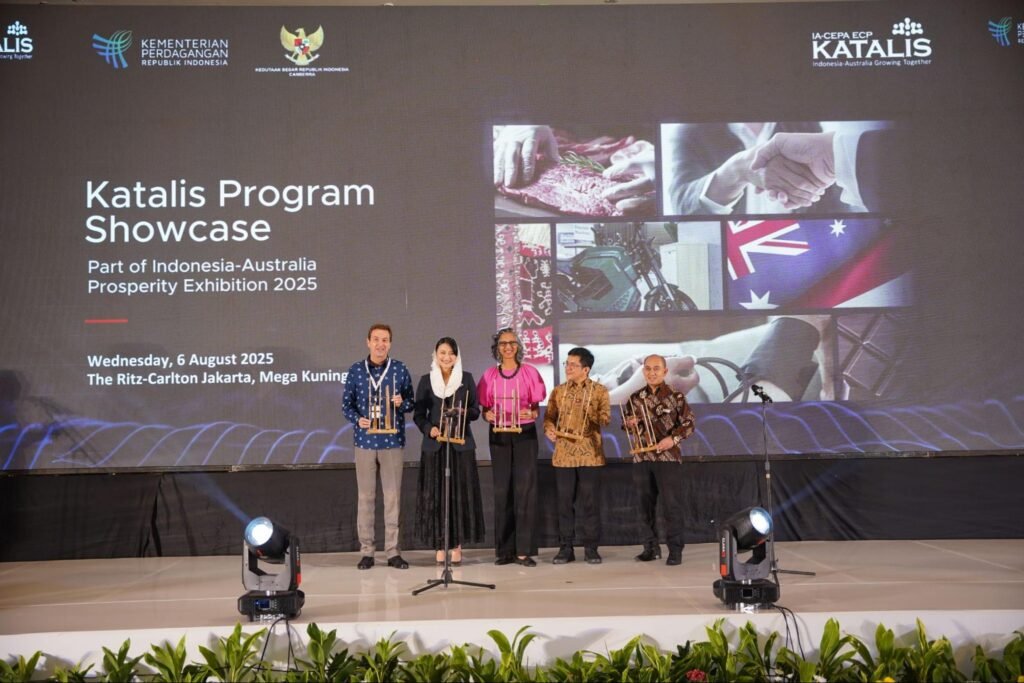
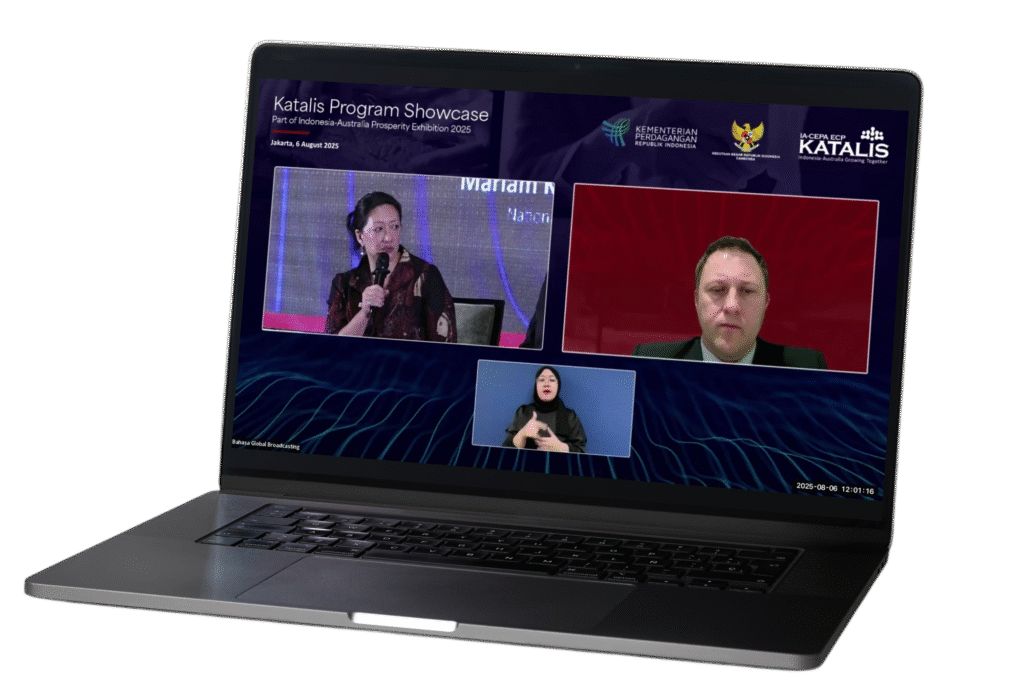
Multinational Event Organized by Global Events, Held in August 2025 at The Ritz-Carlton Jakarta, Mega Kuningan
The Difference Between Onsite and Online Displays in a Hybrid Event
Every hybrid event has two different visual needs. Onsite displays must be strong for large screens and wide viewing distances. Meanwhile, online displays must stay clear on laptops or phones. Because of that, both sides cannot use exactly the same approach.
On the onsite side, the main focus is visibility. The audience must read the message quickly from a distance. Because of that, visual elements are usually larger and bolder. If the visuals are too detailed, the message becomes harder to read.
On the other hand, online displays need a different approach. Digital audiences watch the event through personal screens. Because of that, layout, framing, and visual detail need more attention. If the display looks too flat, online audiences may quickly lose focus.
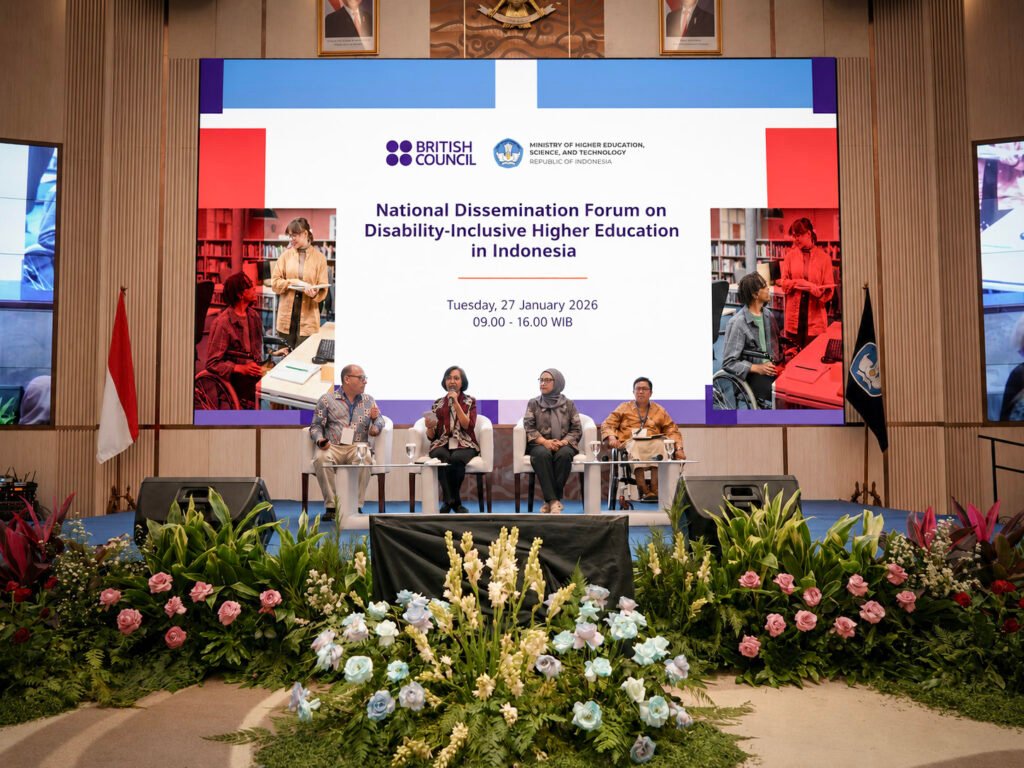
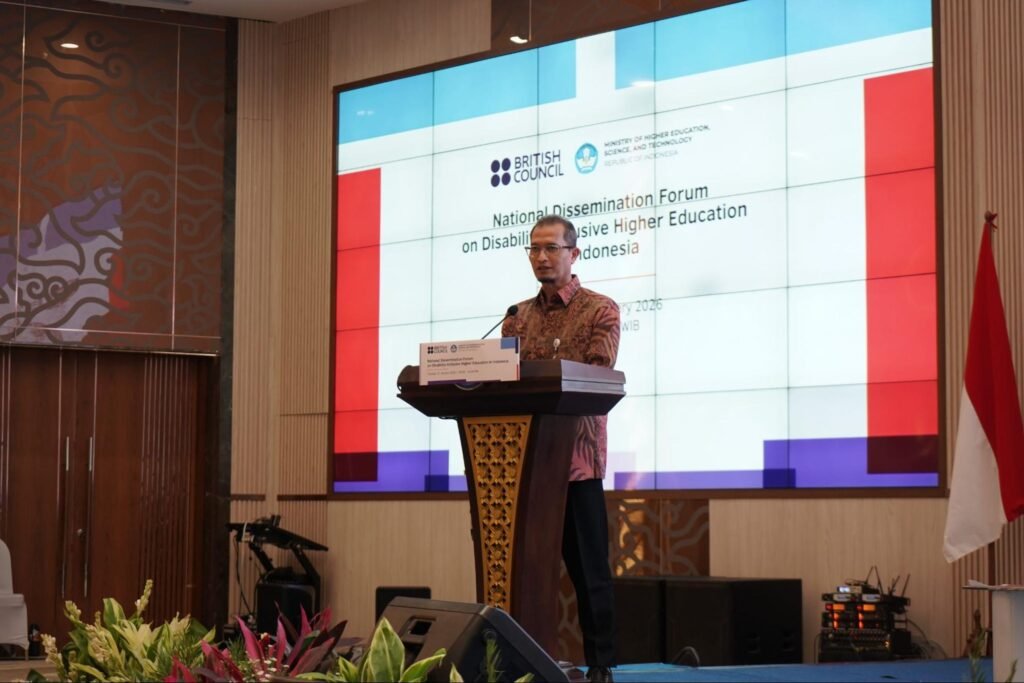
A multicultural event organized by Global Events Organizer Jakarta on 27 January 2026 at the Ministry of Higher Education, Science, and Technology of the Republic of Indonesia
Onsite Visuals Must Be Strong and Clear
Onsite visuals work in a larger physical space. Because of that, videotrons and venue screens must show elements that are easy to read. Titles, key visuals, and branding must appear strong. As a result, onsite audiences can capture the event message more quickly.
In addition, onsite visuals must support the event atmosphere. If the display works well, the stage will feel more alive. However, if the visuals are weak, the venue may feel less impactful. Because of that, stage and screen design must be planned carefully.
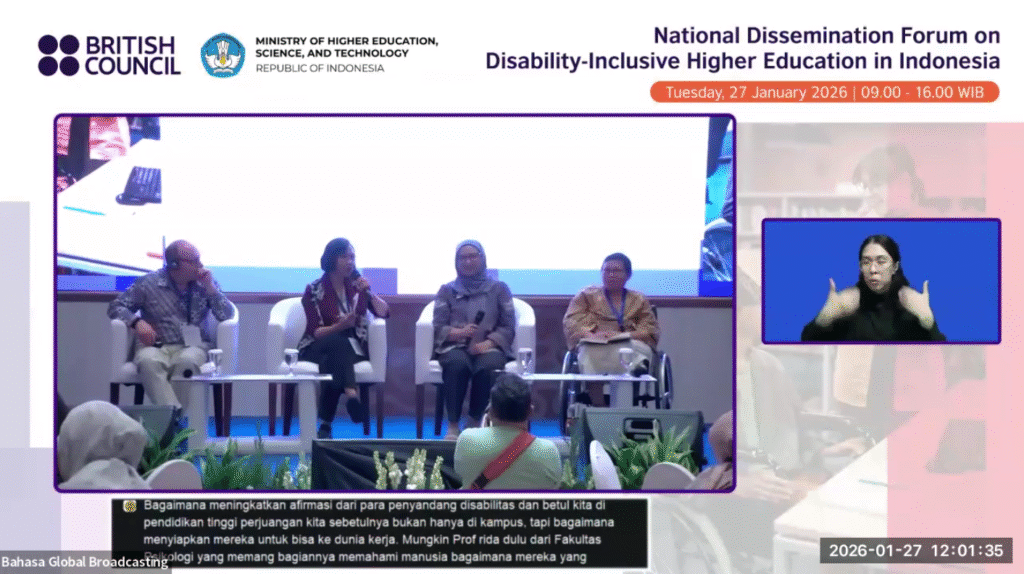
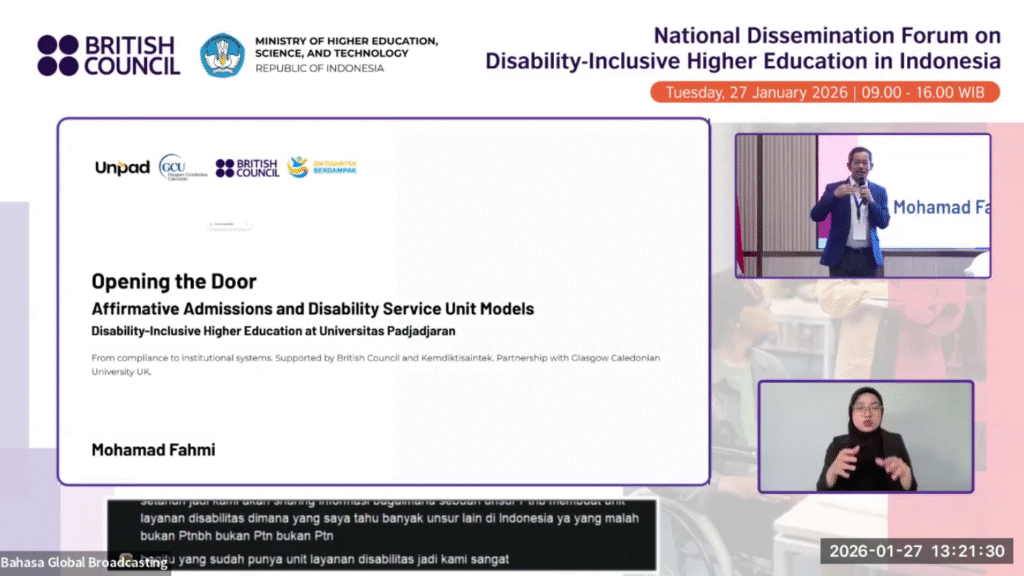
A hybrid event organized by Global Events Organizer Jakarta on 27 January 2026 at the Ministry of Higher Education, Science, and Technology of the Republic of Indonesia
Online Visuals Must Be More Dynamic
Online audiences need displays that feel more detailed and more lively. They do not only see the stage. They also see camera framing, lower thirds, presentations, and visual transitions. Because of that, the streaming display must be designed more dynamically.
In this context, a live streaming vendor and the virtual event management team play an important role. If the streaming layout is designed well, online audiences will feel more comfortable. On the other hand, if the display looks messy, the event quality will feel weaker immediately.
The Role of an Event Organizer in Managing Hybrid Event Visuals
In a hybrid event, the role of an event organizer Jakarta becomes more complex. The team does not only run the event. The team must also ensure visual integration works well at the venue and on digital screens. Because of that, cross-team coordination becomes very important.
A good event organizer must connect production, design, and broadcast needs. If these three areas do not align, the visual result will feel fragmented. As a result, onsite and online audiences will experience the event differently.
This is where experienced event organizer services provide more value. A team that understands hybrid meetings, virtual events, and digital broadcasting can design visuals more effectively. With that, the event message can stay consistent across platforms.
Visual Integration Must Be Planned Early
Hybrid event visuals cannot be prepared suddenly. The planning must begin from the start. The team needs to define stage visuals, streaming layouts, presentation materials, and visual transition flow. Because of that, visual strategy must become part of the main discussion.
If the team only thinks about visuals close to the event day, the results are often weaker. Some elements may look strong at the venue but less effective on streaming. As a result, one side of the event may feel weaker. Because of that, visual integration must be designed from the earliest stage.
Team Coordination Determines the Final Result
Visual strategy will not work well without proper coordination. Production teams, operators, designers, and technicians must work from the same reference. If their communication is weak, the visuals can quickly lose direction. As a result, the event will look less professional.
Because of that, the best event organizer always treats coordination as a priority. This also applies to a corporate event organizer and a conference event organizer handling larger events. The more complex the event, the more important early visual coordination becomes.
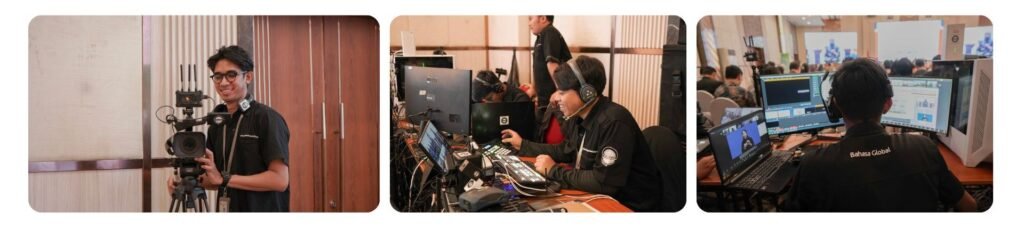
A multicultural event organized by Global Events Organizer Jakarta on 27 January 2026 at the Ministry of Higher Education, Science, and Technology of the Republic of Indonesia
Global Events Organizer Jakarta Supports Better Visual Integration
As an event organizer Jakarta, Global Events Organizer Jakarta understands that visuals play a major role in a hybrid event. We do not only focus on the event concept. We also make sure onsite and online visuals work within one unified strategy. Because of that, the audience experience can stay aligned.
We also support live streaming services, live streaming vendor needs, and hybrid event organizer support for different event formats. For digital events, we are ready to handle virtual event management with a more structured workflow. With that, clients do not need to separate too many parties within one production.
Choosing an event organizer, an event organizer Jakarta, or event organizer services that understand visual strategy is an important step. The right partner does not only arrange the stage. The right partner also manages the audience experience as a whole. Because of that, event quality can stay strong on every side.
If you need an event organizer Jakarta, event organizer services, a live streaming vendor, or more focused support for a hybrid event, Global Events Organizer Jakarta is ready to help. We support onsite events, virtual events, hybrid meetings, and other event needs from planning to execution.
For more information, contact:
📞 +62 811 9224 273 | +62 821 1331 1781
🌐 www.globalvirtualevents.co.id
📧 contact@globalvirtualevents.co.id